I’ve analyzed the animated films I love, and the ones I love a little less, over and over because I’m trying to answer something that genuinely matters to me:
What would it take for my generation of animation creatives to make movies like The Lion King?
I don’t want to spend my career admiring the classics from a distance. I want to help make films that leave people feeling that way again.
Now, this isn’t me looking for a formula. I don’t believe formulas create great art. If anything, I think some of the films that resonate less with audiences have leaned too heavily on them—not the deeper principles, but the surface patterns.
“The protagonist has a cute sidekick.”
Okay… but why? Who are they? What purpose do they serve? What do they reveal about the protagonist? What would the film lose if they disappeared?
Art isn’t built from checklists. Ultimately, I think great films come from inspiration, honesty, heart, and soul. But understanding story structure gives us better tools to support those things.
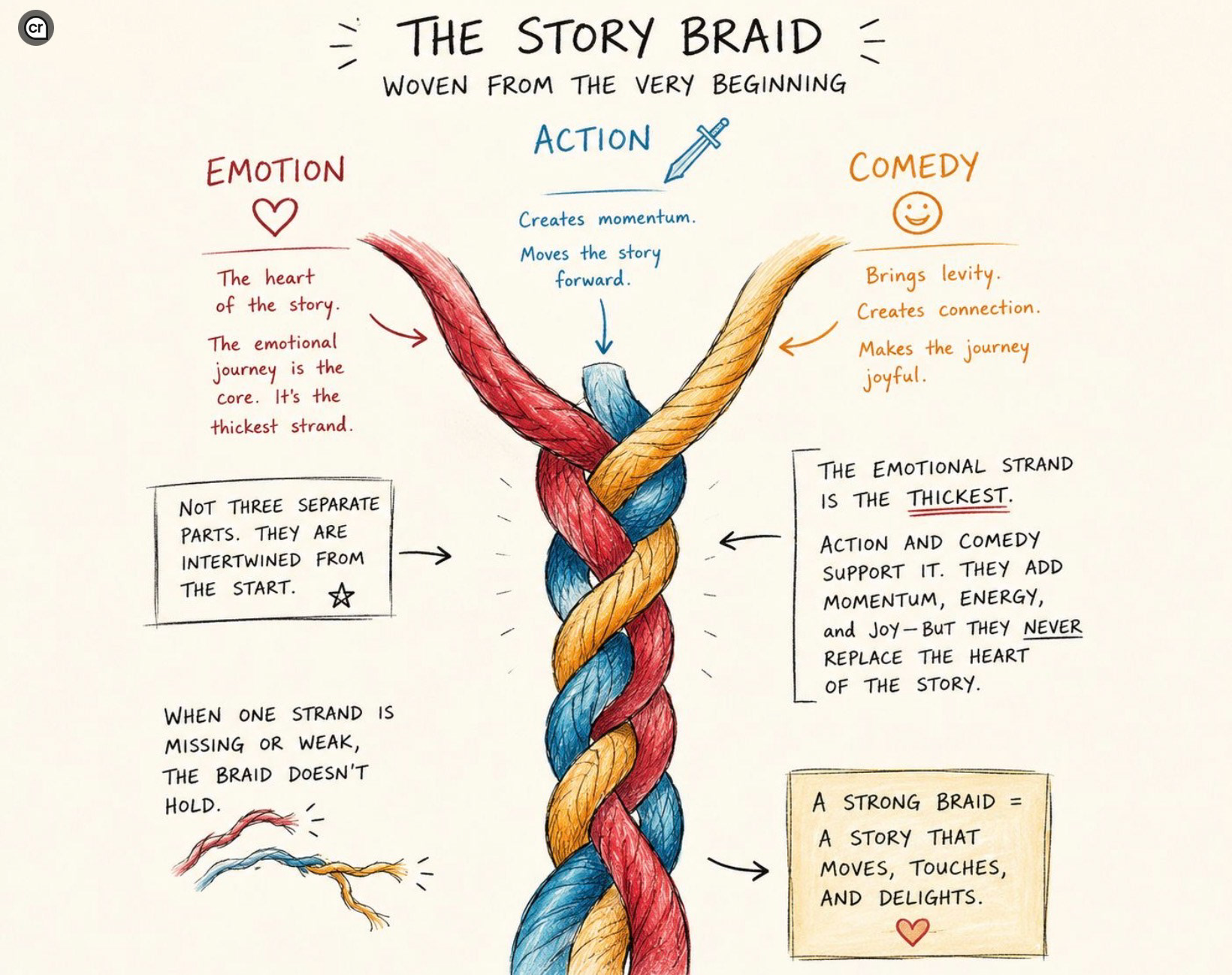
One pattern I keep coming back to is that my favorite animated films all feel like a braid woven from three strands:
● Emotion.
● Action.
● Comedy.
Not three separate acts. Not “now we laugh,” “now we cry,” “now we have an action sequence.” They’re intertwined from the very beginning.
I could point to examples where one of those strands arrives much later, or where only two are really carrying the film, but I don’t want to single out movies. Instead, try the exercise yourself. Watch your favorite animated films and ask yourself: How early do all three of these energies appear?
The other thing I’ve noticed is that the braid isn’t evenly sized.
The emotional strand is thicker.
Action and comedy create momentum. They keep the audience engaged. Films like Aladdin, Tangled, Shrek, and Anastasia balance those beautifully. But neither action nor comedy ever replaces the emotional core. They’re in service of it.
When I’m writing or giving story notes I think about it in two layers.
First, identify the emotional heart of the story. What’s the deeper wound? What’s the central question? What’s the film really trying to say? Then build the plot and character arcs so they genuinely support that emotional journey.
Only after that do I zoom into the scene-by-scene writing. Is there enough forward momentum? Does the story keep moving? Are there opportunities for humor that feel truthful to the characters?
Because while emotion is what stays with us years later, comedy and actions make us want to stay for the journey while we’re watching the movie.
Maybe that’s one of the hidden balancing acts of great animated storytelling.
The heart carries the weight.
Action carries the momentum.
Comedy carries the joy.
What would it take for my generation of animation creatives to make movies like The Lion King?
I don’t want to spend my career admiring the classics from a distance. I want to help make films that leave people feeling that way again.
Now, this isn’t me looking for a formula. I don’t believe formulas create great art. If anything, I think some of the films that resonate less with audiences have leaned too heavily on them—not the deeper principles, but the surface patterns.
“The protagonist has a cute sidekick.”
Okay… but why? Who are they? What purpose do they serve? What do they reveal about the protagonist? What would the film lose if they disappeared?
Art isn’t built from checklists. Ultimately, I think great films come from inspiration, honesty, heart, and soul. But understanding story structure gives us better tools to support those things.
One pattern I keep coming back to is that my favorite animated films all feel like a braid woven from three strands:
● Emotion.
● Action.
● Comedy.
Not three separate acts. Not “now we laugh,” “now we cry,” “now we have an action sequence.” They’re intertwined from the very beginning.
I could point to examples where one of those strands arrives much later, or where only two are really carrying the film, but I don’t want to single out movies. Instead, try the exercise yourself. Watch your favorite animated films and ask yourself: How early do all three of these energies appear?
The other thing I’ve noticed is that the braid isn’t evenly sized.
The emotional strand is thicker.
Action and comedy create momentum. They keep the audience engaged. Films like Aladdin, Tangled, Shrek, and Anastasia balance those beautifully. But neither action nor comedy ever replaces the emotional core. They’re in service of it.
When I’m writing or giving story notes I think about it in two layers.
First, identify the emotional heart of the story. What’s the deeper wound? What’s the central question? What’s the film really trying to say? Then build the plot and character arcs so they genuinely support that emotional journey.
Only after that do I zoom into the scene-by-scene writing. Is there enough forward momentum? Does the story keep moving? Are there opportunities for humor that feel truthful to the characters?
Because while emotion is what stays with us years later, comedy and actions make us want to stay for the journey while we’re watching the movie.
Maybe that’s one of the hidden balancing acts of great animated storytelling.
The heart carries the weight.
Action carries the momentum.
Comedy carries the joy.