The Era of Endless Rewrites in Animation: Why Changing the Plot Doesn’t Always Change the Story
We’re living in the era of endless rewrites.
Movies stay in development for years. Entire sequences get replaced. Sometimes scripts are still being rewritten just months before release after five years of development.
Yet somehow… they don’t necessarily get better.
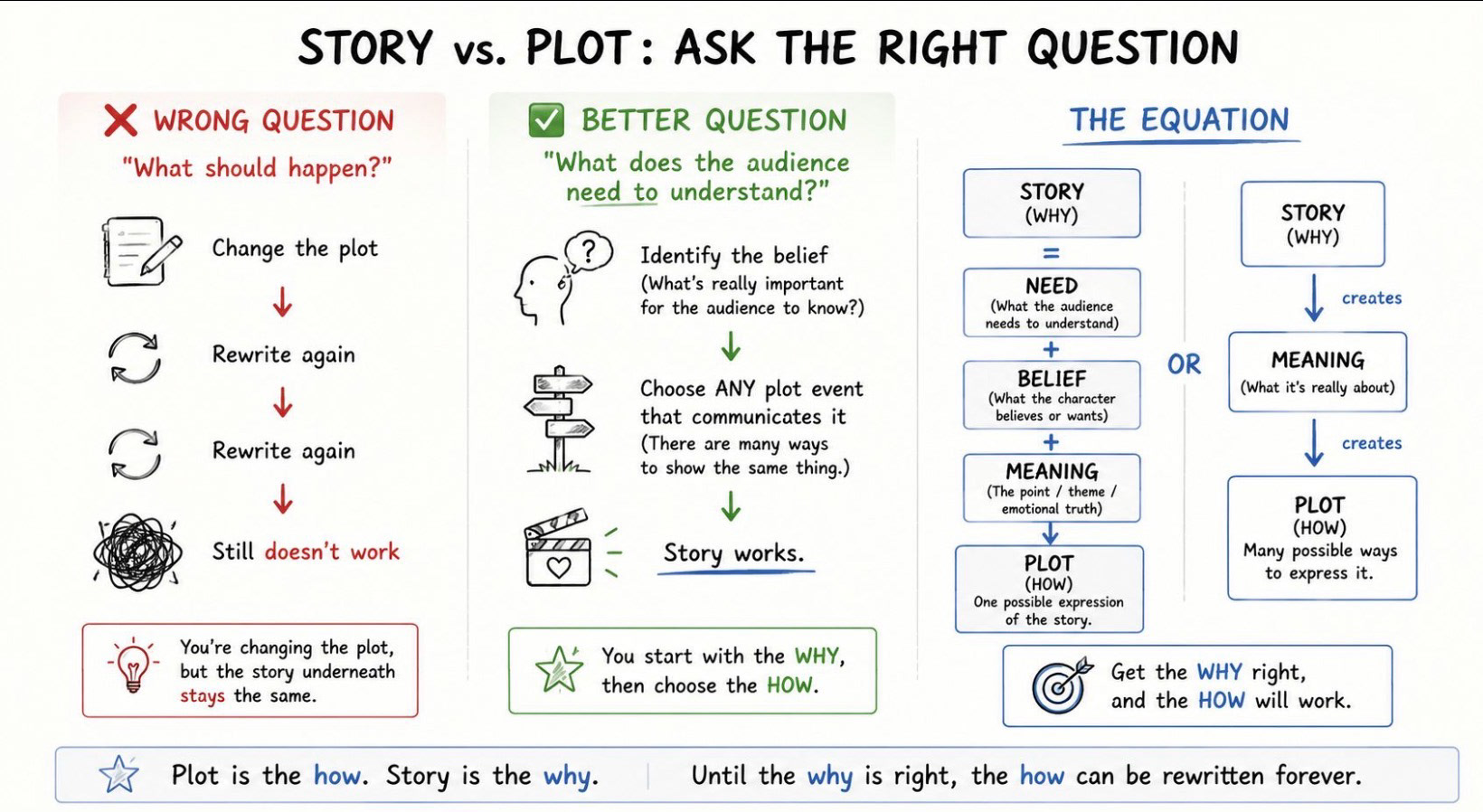
My suspicion is that many rewrites are trying to answer the wrong question.
Instead of asking, “What are we actually trying to say?”, they ask, “What should happen instead?”
So the plot changes.
But the story doesn’t.
After years of writing and editing, I’ve come to a conclusion that might sound strange:
The plot isn’t what makes a story work.
What matters is what the plot communicates.
I’ve seen writers spend enormous amounts of time asking, “What should happen next?” Then they write the scene… and it still doesn’t work.
Not because the event itself is wrong.
Because they never asked the more important question:
What does the audience need to understand by the end of this scene?
Take Jasmine running away from the palace in Aladdin. I don’t think that scene works because she runs away. That’s just one possible plot event.
It works because of why she runs away.
Before we can invest in the love story, we need to understand something fundamental about Jasmine: she believes marriage should be for love, not obligation.
Once you know that, then you ask:
How can I communicate that belief?
Running away is one answer. But she could also refuse every suitor, barricade herself in her room, publicly challenge the tradition, or deliberately drive potential husbands away.
The plot could change completely.
The underlying story would stay exactly the same.
This is why I think some rewrites struggle.
They replace one plot point with another while carrying over the exact same underlying problem. The scene still doesn’t have a dramatic purpose beyond, “Something needs to happen because this is a movie.”
Imagine someone tells me, “I don’t know what to do anymore.” I suggest watching a documentary. It doesn’t help. Then learning a language. Still nothing.
Eventually I stop asking, “What should you do?” and ask, “What’s actually wrong?”
It turns out they’re mentally exhausted.
Now the solution changes because I finally understand the problem.
To me, that’s what effective rewrites do.
They don’t begin by changing the events.
They begin by understanding the purpose.
Plot is the how.
Story is the why.
And until the why is right, the how can be rewritten forever.
We’re living in the era of endless rewrites.
Movies stay in development for years. Entire sequences get replaced. Sometimes scripts are still being rewritten just months before release after five years of development.
Yet somehow… they don’t necessarily get better.
My suspicion is that many rewrites are trying to answer the wrong question.
Instead of asking, “What are we actually trying to say?”, they ask, “What should happen instead?”
So the plot changes.
But the story doesn’t.
After years of writing and editing, I’ve come to a conclusion that might sound strange:
The plot isn’t what makes a story work.
What matters is what the plot communicates.
I’ve seen writers spend enormous amounts of time asking, “What should happen next?” Then they write the scene… and it still doesn’t work.
Not because the event itself is wrong.
Because they never asked the more important question:
What does the audience need to understand by the end of this scene?
Take Jasmine running away from the palace in Aladdin. I don’t think that scene works because she runs away. That’s just one possible plot event.
It works because of why she runs away.
Before we can invest in the love story, we need to understand something fundamental about Jasmine: she believes marriage should be for love, not obligation.
Once you know that, then you ask:
How can I communicate that belief?
Running away is one answer. But she could also refuse every suitor, barricade herself in her room, publicly challenge the tradition, or deliberately drive potential husbands away.
The plot could change completely.
The underlying story would stay exactly the same.
This is why I think some rewrites struggle.
They replace one plot point with another while carrying over the exact same underlying problem. The scene still doesn’t have a dramatic purpose beyond, “Something needs to happen because this is a movie.”
Imagine someone tells me, “I don’t know what to do anymore.” I suggest watching a documentary. It doesn’t help. Then learning a language. Still nothing.
Eventually I stop asking, “What should you do?” and ask, “What’s actually wrong?”
It turns out they’re mentally exhausted.
Now the solution changes because I finally understand the problem.
To me, that’s what effective rewrites do.
They don’t begin by changing the events.
They begin by understanding the purpose.
Plot is the how.
Story is the why.
And until the why is right, the how can be rewritten forever.